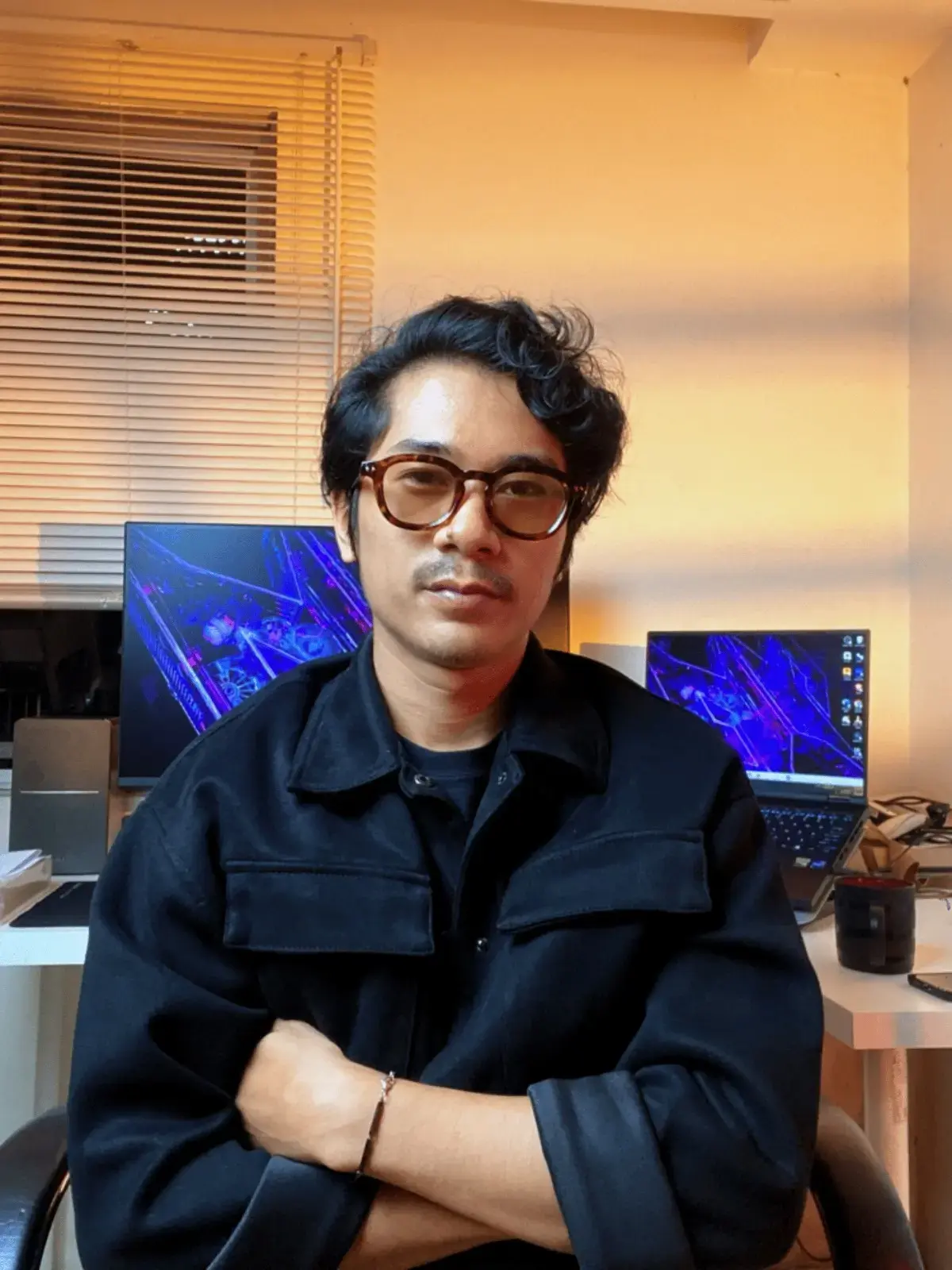
Use the attached reference photo as the face anchor. Preserve bone structure, skin tone, and full facial identity exactly.

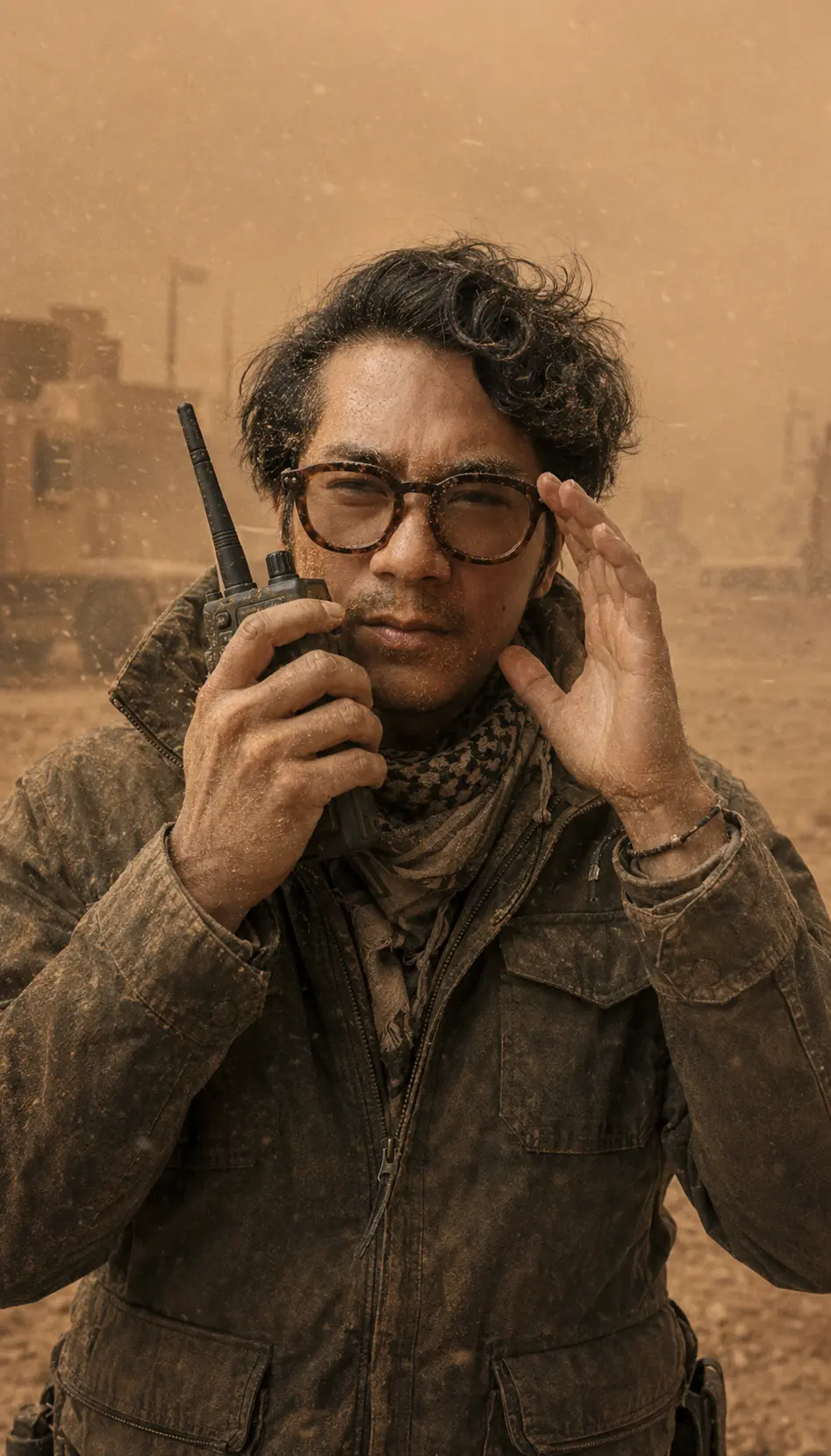
Scene: a field correspondent or crisis responder caught in the middle of a severe sandstorm in an arid desert region. The image is shot as if by a documentary photographer with a fast lens — slightly motion-blurred background, sharp subject.

RIGHT HAND — holding a radio: grips a military-style walkie-talkie firmly. The thumb presses the PTT (push-to-talk) side button; four fingers wrap around the back of the device. All FIVE fingers must be individually visible and anatomically correct — knuckles under tension, slight skin compression where fingers meet the hard casing. The radio is raised to mouth level.

LEFT HAND — partial face shield: raised to the side of the face to block incoming sand. Fingers are separated slightly — not a fist — as if angling against the wind. All FIVE fingers visible from this angle, palm facing the wind direction. The hand does not obscure the face; it frames it from the side.

FACE-SCENE INTEGRATION — CRITICAL: The subject's face must be embedded in the storm environment, not photographed separately. Fine sand particles cling to: the outer edges of both eyebrows, the temple area, the lower lip, and the exposed upper cheek. The face is lit by diffuse overcast storm light — flat, grey-orange, no hard shadows. The same ochre-dust color temperature that saturates the air also tints the skin. Squinting eyes — not closed — pupils barely visible through the narrowed lids. Wind-direction implied by the micro-displacement of any visible hair at the hairline or brow edges.

Facial expression — CRITICAL: active distress managed under professionalism. Jaw clenched slightly. Brow furrowed hard. Lips compressed against the wind and against the grit. The expression must read: I am in the middle of this, and I am not stopping. Not fear — controlled urgency.

Outfit: form-neutral field jacket in khaki or olive, collar turned up. Lightweight keffiyeh or buff loosely around the neck, not covering the face. No branded insignia.

Environment: mid-storm visibility — the background is 60% obscured by ochre-brown sand haze. Shapes of low structures or vehicles barely visible. Sand particles catch the diffuse light as bright specks in the air around the subject.

Color grade: desaturated ochre, muted warm tones, high contrast on face, film grain, aspect ratio 4:5.

Anatomically correct proportions: 1:7 head-to-body ratio, natural shoulder width, realistic torso length, arms anatomically proportioned.

Negative: no extra or missing fingers, no floating hand anatomy, no clean studio skin (face must carry environmental texture), no beauty lighting, no face composited over body, no gender-coded silhouette, no calm or neutral expression.